
Wilmette Previous Resident Sources
No single roll lists every person tied to a Wilmette home. The current parcel supplies a stable PIN, or Property Index Number, while deed records follow ownership. Directories and census schedules are better evidence of a household. Building records and maps date changes to the structure. The strongest answer places each fact beside its source and year.
| Source | Years It Covers | Where Held | What It Shows |
|---|---|---|---|
| Cook County CRS index | 1985 to present | County Clerk online and office | Parties, instrument, date, PIN and legal description |
| Wilmette permits | 1920 to present | Community Development and request channels | Owners, applicants, contractors and work dates |
| Reverse directories | 1917–18, 1922–23, 1925, 1935, plus local runs | WPL and WHM | Occupant or subscriber by address |
| Ownership indexes | 1936–59 and 1960–62 runs | WPL Local History Room | Address-owner snapshots |
| Federal census | Released through 1950 | NARA and library databases | Households and civil division |
| Sanborn Volume J | 1914, updated through 1936 | WPL Local History Room | Building footprint and use |
Start online for a recent sale. For the middle decades, ownership indexes and permits can bridge gaps. Older past residents often require directories, census records, maps, and an office or museum visit. A blank online result is only a cue to change channels.
Fix the Wilmette Parcel First
Begin at the Cook County Assessor address search. Save the PIN, exact property-location text, class, neighborhood, and visible parcel traits. “Property Location” is an assessor locator, not proof of a postal address or of where an owner lives. Next open CookViewer and compare the parcel with nearby lots, streets, alleys, and older layers.
Keep the subdivision, block, lot, and full legal description when available. Street wording can change, but recorded instruments follow the land. A current PIN may also have an older lineage after a split or combination. That is why the parcel is the sound base for finding previous residents.
- PIN
- The Cook County parcel identifier used across assessor, tax, map, and recording records.
- Legal description
- The formal land description, often subdivision, block, and lot.
- Chain of title
- The linked sequence of recorded transfers for the same land.
Note: Never treat an assessor location or tax exemption as a complete list of people who lived at the parcel.
Walk Wilmette Deeds Backward
The Cook County Clerk’s Recordings System is the online deed-and-lien index. County material describes searchable coverage from 1985 forward. Search the PIN first, then test the address, party names, dates, type, subdivision, and legal description. The current “indexed through” date is an end date, not the archive’s beginning.
- Find the present parcel and save its PIN and legal description.
- Locate the newest relevant deed and record its document number, parties, and date.
- Take the seller, the grantor, and search that party as an earlier grantee.
- Repeat while checking that each instrument concerns the same land.
- At the online cutoff, move to the Clerk counter, tract books, deed books, or archives.
A grantor transfers an interest; a grantee receives it. Trust deeds, quitclaim deeds, transfer-on-death instruments, and corrections may interrupt a neat sale pattern. Plats and some excluded documents require downtown service. For the full current chain, use the Wilmette streets search.
Wilmette Ownership Index Bridge
The online recording floor leaves a long gap. Wilmette Public Library offers a precise bridge: ownership index runs beginning July 1936, supplements through September 1936, a July 1937 through March 1959 run, and another from October 1960 through March 1962. They are address-owner snapshots, not proof that each owner lived there.
The WPL house-history route adds address binders, clippings, photos, floorplans, permits, surveys, and newspaper material. Its worksheet starts with the current address and legal description, then checks the digital collection, directories, census databases, title material, maps, and museum files. Local-history access may require an appointment.
WPL also holds January real-estate issues of Wilmette Life for 1935–40. A sale notice or construction story can connect a name to a date when a deed index is thin.
The library’s house-history page is shown below.
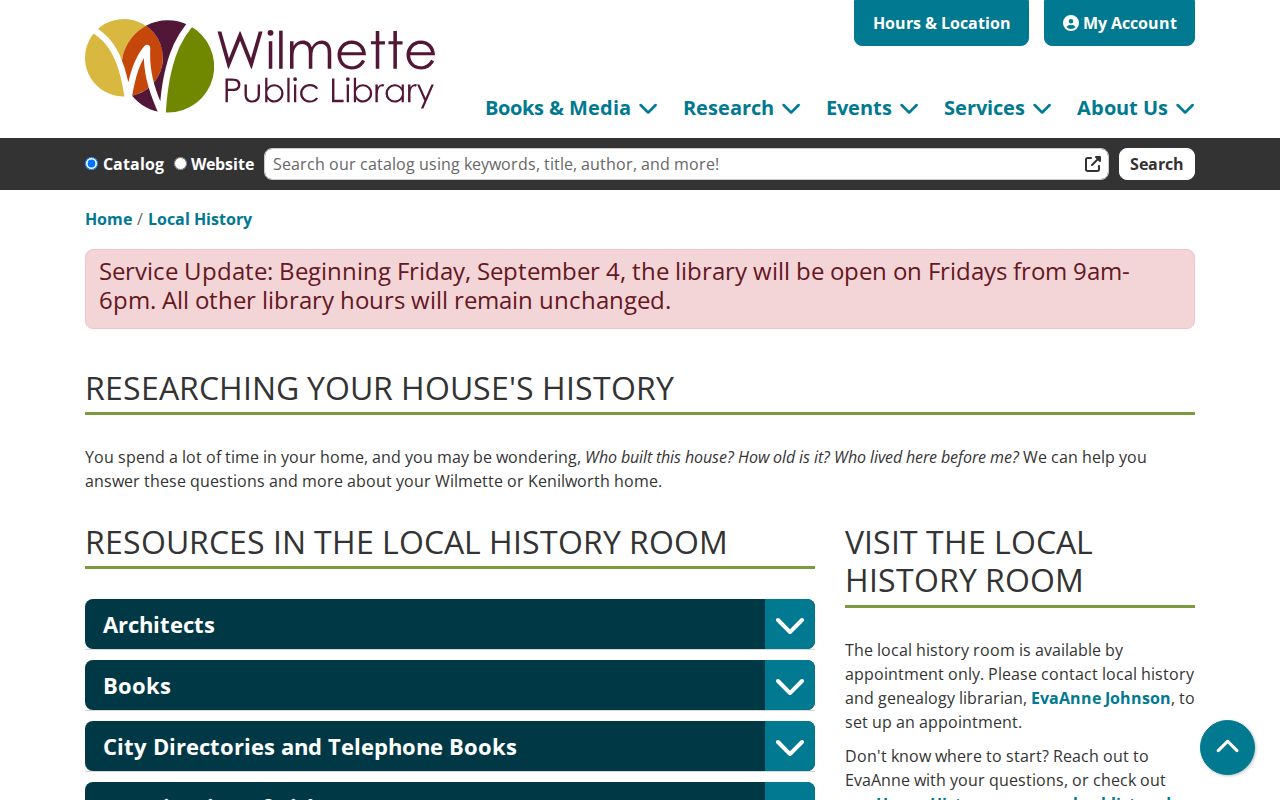
Its collection list helps turn an address into a focused request for a binder, permit, clipping, or volume.
Maps Date Wilmette House Changes
Maps do not name all previous residents, but they test whether a building and address existed in the claimed year. WPL’s Sanborn fire-insurance Volume J covers 1914 with additions through June 1936, including Wilmette east of Ridge Avenue. It shows footprint, use, and structural context. The fragile bound volume cannot be photocopied.
The Wilmette historical maps inventory includes additions and annexations from 1883–1911, original plat and Gross Point material from 1869–1874, Ouilmette reservation context from 1829–1842, and New Trier Township in 1850. Some maps are online; others are appointment-viewable.
The map collection appears below.
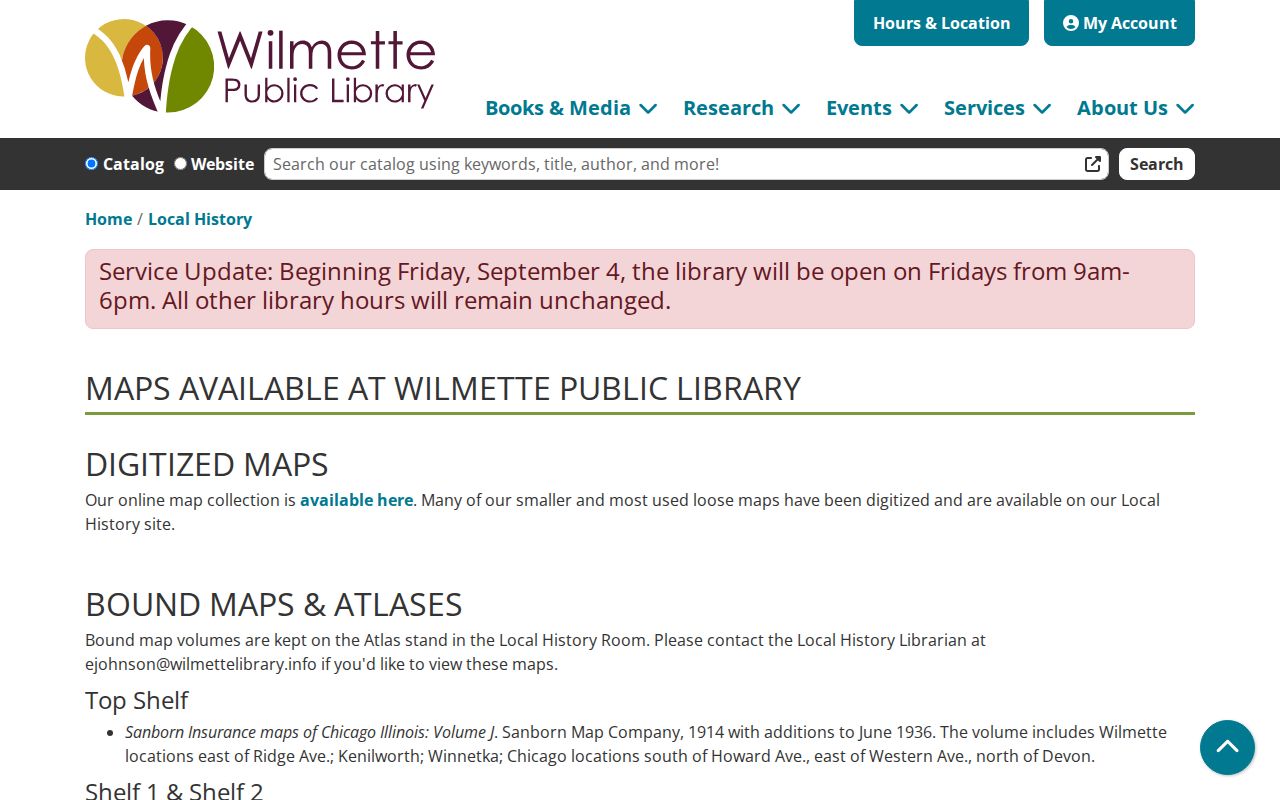
Map dates can separate a missing address from a missing record and identify a former addition or civil label.
Old Wilmette Labels Break Searches
Wilmette was incorporated in 1872. Gross Point was incorporated in 1874 and annexed in stages during 1924 and 1926. No Man’s Land retained a separate identity until 1942. A person tied to a modern Wilmette parcel may appear under Gross Point, New Trier Township, an addition name, or an old unincorporated description.
Do not force a modern city name onto each search. Preserve old road text, cross streets, railroad references, house number zero, and publisher abbreviations. Bridge those clues with the legal description and map. No official source identified one village-wide street-renumbering year, so a changed number must be proved case by case.
The former Gross Point Village Hall, built in 1896, now houses Wilmette History Museum. The building helps explain why former-village, organization, permit, and plat records may sit with the museum rather than one county portal.
Wilmette Museum House Records
The Wilmette History Museum PastPerfect catalog opens a search into archival objects, but not every house file has a digital image. The Research Room holds real-estate documents, photos, permits, plats, biographies, original records, directories, business files, 1850 New Trier tax material, and cemetery sources. Unindexed title examinations can reach back to the Ouilmette family when the researcher brings a legal description.
The public catalog view appears below.
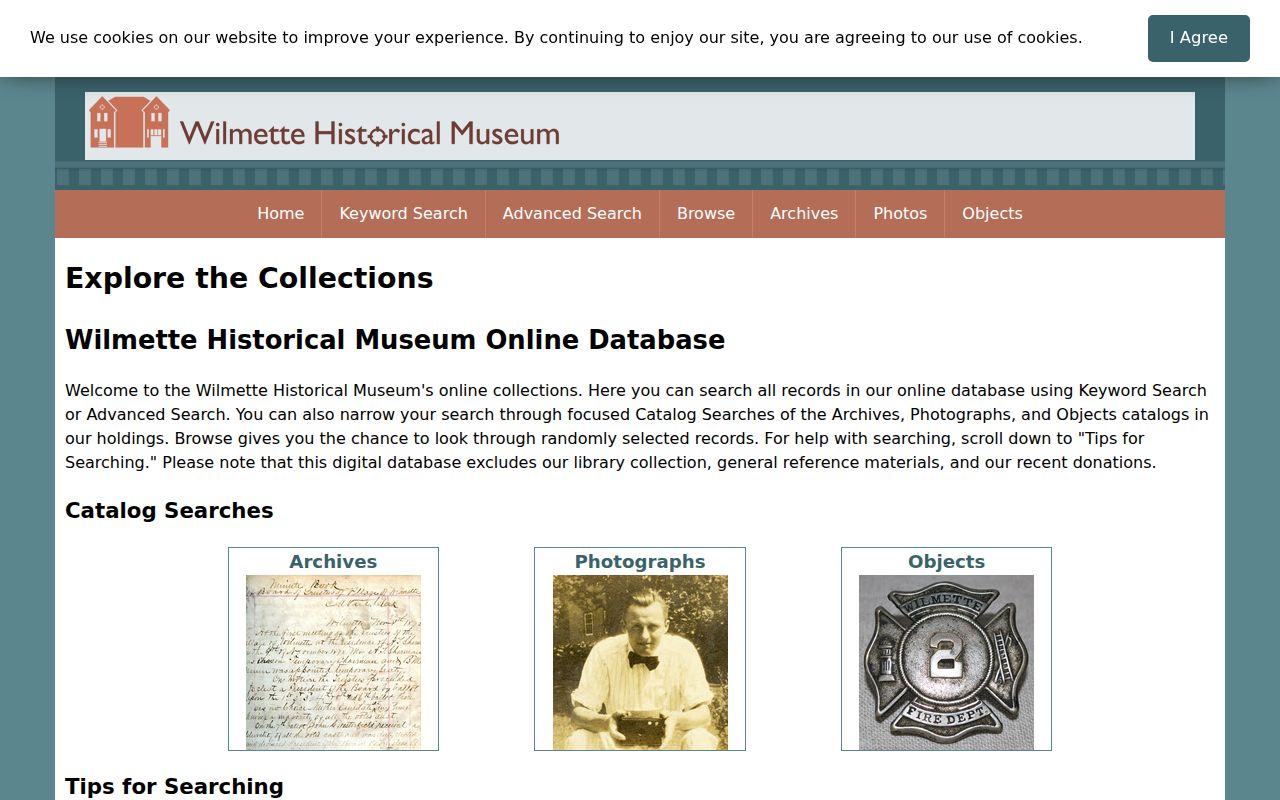
A catalog hit identifies an item to request; it does not mean the full file or every name is online.
The Museum is at 609 Ridge Road. Call 847-853-7666 or email museum@wilmette.com when a description is brief or a house file is not indexed.
Match Wilmette Past Households
Deeds identify owners, while directories and census schedules can identify occupants. Search WHM’s 1890, 1898, 1908, and 1946 directories. WPL has reverse runs for 1917–18, 1922–23, 1925, and 1935, plus Polk, North Shore, and telephone volumes. Collection details appear on the Wilmette city directory page.
- Search the address in the nearest reverse directory year.
- Record names, spouse text, occupations, phone text, and address as printed.
- Pair that result with the nearest released census, now available through 1950.
- Check the civil division because Gross Point or New Trier wording may differ.
- Use deeds, permits, newspapers, and obituaries to distinguish similar names.
WPL’s obituary index covers digitized notices from 1898–1939, with missing early issues, and indexed obituaries from 1949 forward. Cemetery and probate clues may identify heirs or explain when a household ended.
Lawful use. Research previous residents for house history, genealogy, heirs, or personal curiosity. Never use a record trail to watch, threaten, or harass a living person.
When Wilmette Resident Records End
The 1871 Great Chicago Fire destroyed many Cook County vital records. Later finding aids, including work rooted in the 1938 WPA Historical Records Survey, are essential. Newer records can evade a quick search because a deed predates online coverage, a document is excluded, a PIN changed, a surname was misspelled, or an address used a prior jurisdiction.
Change one variable at a time. Search legal descriptions, party names, old street text, landmarks, and the next directory year. Ask the Clerk about archives, the library about appointment material, Community Development about permits, and the Museum about title files. A blank portal result is not proof that nobody lived there.
Check both online and offline access before closing the trail. CRS has party, PIN, address, type, date, subdivision, and legal-description paths, but the downtown Clerk retains older or excluded material. WPL’s Local History Room is appointment-only and adds print directories, telephone books, ownership indexes, maps, microfilm, and house binders. The Museum Research Room adds biographies, organization records, old permits, plats, photographs, and unindexed title work. A narrow request that gives the address, legal description, likely year, and record type is more useful than asking an office for every name ever tied to a house.
Also test the newspaper trail in more than one way. Search the old address, owner surname, spouse name, contractor, subdivision, and phrases such as sale, building permit, or new residence. Wilmette Life, Wilmette Beacon, Lake Shore News, and Local News have different gaps and wording. The library has digitized surviving pre-1939 issues and holds later runs on microfilm or in-house digital systems. An index entry and the scanned issue can reveal different details, so inspect both when available.
For early previous residents, build a jurisdiction timeline beside the household timeline. Write down whether the source called the place Wilmette, Gross Point, New Trier Township, No Man’s Land, or a named addition. Record the census enumeration place as printed. This prevents a true match from being discarded because today’s municipal label was not yet in use. It also helps distinguish two families with the same surname on nearby North Shore streets.
Note: Record whether each name proves ownership, occupancy, a permit role, a civic appearance, or only a possible link.