
Wilmette Neighbor Record Layers
A sound neighbor lookup first defines the block, then joins each parcel to a source. CookViewer supplies geometry and PINs. Assessor, tax, and recorded instruments add parcel facts. Voter tools have strict limits, while reverse directories describe earlier households. The source date matters as much as the name.
| Source | What It Shows About a Block | Access |
|---|---|---|
| CookViewer | Parcel polygons, PINs, addresses, layers and selected-parcel sets | Free map, selection and export tools |
| Assessor and tax portal | Class, value, tax status, exemptions and PIN lineage | Separate address or PIN lookups |
| Clerk CRS | Deeds, mortgages, liens, easements and plats | Online index from 1985; older and excluded records at office |
| Illinois voter lookup | Verification for one supplied person | Name, birth date, ZIP, then street; no public block browse |
| WPL and WHM directories | Past occupants, subscribers and address changes | Online, library appointment, or museum research |
| Village records | Permits, zoning actions and public civic participation | Community Development, archives and FOIA |
The useful output is a parcel list with source and retrieval-date columns, not one answer called “neighbors.” A deed can prove a transfer without proving occupancy. A directory can place one subscriber at an address without naming the whole household.
Map Wilmette Neighbors by Parcel
Open CookViewer and choose Address Locator or Parcel Address Locator. The result panel opens Property Details for the target parcel. Use the PIN as the join key. It is safer than a display address when abbreviations, corner lots, condominium common elements, or older parcel boundaries complicate the block.
- Search the target address and inspect its parcel geometry and PIN.
- Click adjacent polygons, or draw a rectangle or polygon around the block.
- Use Nearby Search when the current release offers a suitable radius.
- Export selected results to CSV or Excel and retain the map date.
- Check each PIN separately in assessor, tax, and recording sources.
Alleys, rail corridors, and corner parcels can make a visual neighbor different from a legal adjoining parcel. Historical imagery and parcel archives can show whether today’s nearby house was once vacant ground or part of a larger lot.
For a whole named street rather than one immediate block, continue with the Wilmette street directory workflow.
CookViewer 3.1 for Wilmette
Cook County launched CookViewer in 2010 and announced version 3.1 on June 30, 2025. The release added a newer map engine, improved mobile handling, parcel symbology, a guided tour, measurement tools, and PDF reports. That update makes a compact village such as Wilmette practical to inspect at block scale, but it does not turn the map into a roster of people.
The county’s CookViewer 3.1 announcement appears below.
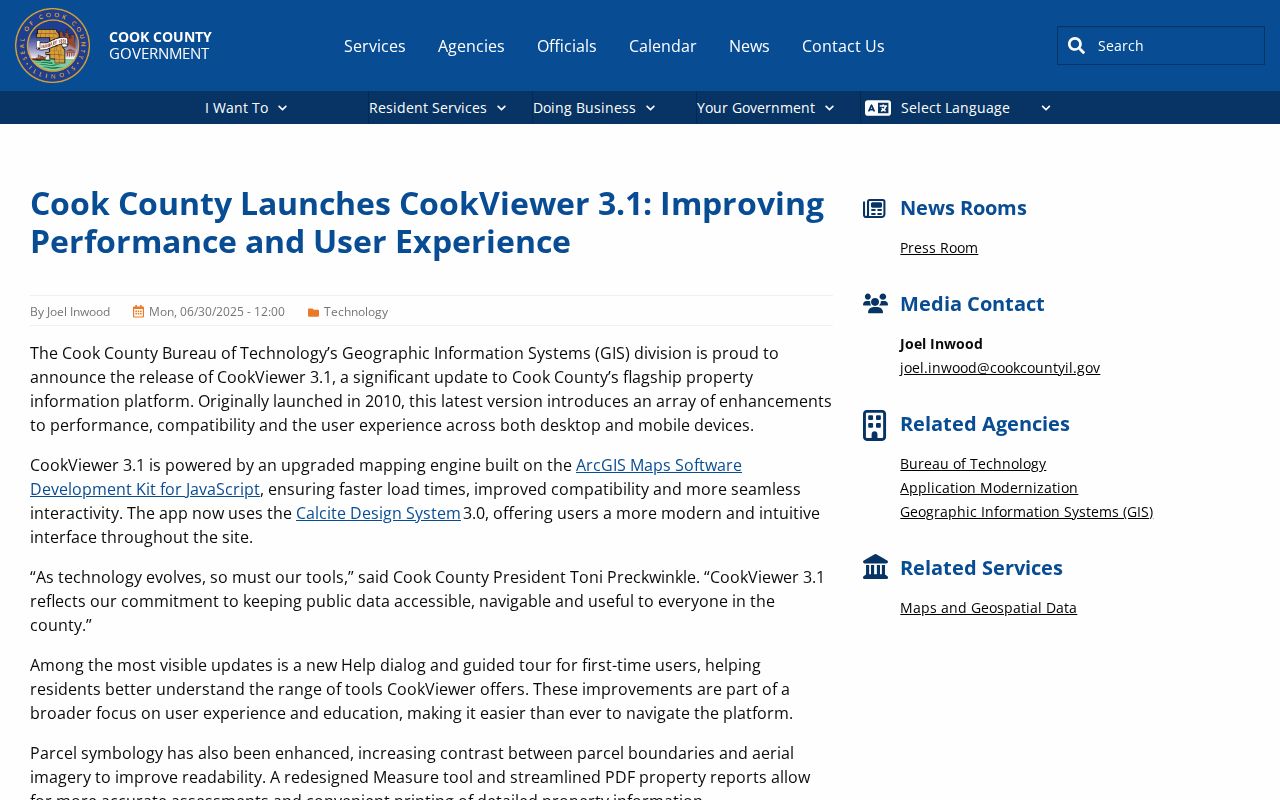
The release details explain the current selection and report tools used to build a documented block list.
Note: Record the selected layer, PIN, address text, and retrieval date before joining map rows to a separate property source.
Confirm Wilmette Parcel Owners
Take each selected PIN to the Cook County Assessor search. The public form begins with a PIN, address, neighborhood, township, or property class; it does not expose a general owner-name field. The card can show property traits, classification, valuation, exemption, and appeal clues. Its “Property Location” field is not a legal or postal mailing address.
Next check the Property Tax Portal for bill and payment context, tax-sale hints, and PIN lineage. Use the Clerk’s CRS index only when a recorded instrument answers the question. Online CRS coverage is described from 1985 forward, and images or excluded instruments can require paid or downtown service.
These joins identify interests in land, not every person under the roof. A trust, company, estate, or owner with a separate mailing address may appear. Exemptions can be clues about an application, but they are not household lists. Label names as owner, grantee, taxpayer, applicant, or historical occupant rather than calling them current Wilmette neighbors without proof.
Wilmette Voter Visibility Is Limited
The Illinois voter registration lookup verifies one person supplied by the user. It requires first and last name, birth date, and a five-digit ZIP, followed by street number and street name. It has no public browse-by-block mode. A failed match can reflect input, status, protection, or file maintenance; it does not prove a person is absent.
State and Cook County voter files have eligibility, purpose, fee, redaction, and use rules. They are not unrestricted resident directories. Address Confidentiality Program records also require protection. The lawful route is to verify an individual already known to the researcher or, when eligible, request the controlled file for its permitted political purpose.
Do not infer that all adults on a block appear on a voter roll. Some are not registered, some records are protected, and an individual lookup provides confirmation rather than a street list. That distinction is central when checking your Wilmette neighbors.
Indian Hill’s Private Directory
The Indian Hill Home & Garden Club is the clearest current neighborhood organization found in Wilmette. Established in 1954, it serves Indian Hill Estates West, maintains seven entrances, and holds social events. Eligible residents are encouraged to join. Membership includes a directory and quarterly newsletter, but that directory is member-oriented, not a Village public roll.
The organization’s site appears below.
The public page establishes the group’s scope and services. It does not authorize copying its member directory or inferring membership from a parcel location.
| Community source | Scope | Directory access |
|---|---|---|
| Indian Hill Home & Garden Club | Indian Hill Estates West | Private member directory |
| Kenilworth Gardens history | Historical neighborhood and Northridge Club context | No current public roster found |
| Wilmette Woman’s Club | Historical civic network | WPL directories for selected years |
| Village boards and commissions | Public civic participation | Agenda and minutes search |
Find Wilmette Civic Connections
Community records explain how people took part in local life, but they are not proof of residence. WPL holds Wilmette Woman’s Club directories for 1913–15, 1922–65, and 1972, plus Garden Club and religious organization histories. St. Joseph Church, founded in 1843, anchors Gross Point history, while museum and library sources preserve church and cemetery evidence.
The Village Agenda Center can be searched by date, term, and category. Board, Historic Preservation, Land Use, Plan Commission, Zoning Board, and Public Safety packets may name appointees or public participants tied to a project. Treat the appearance as civic evidence only. A speaker may not live next to the project or remain at an old address.
WPL’s Voices of Wilmette includes interviews with people connected to the village. Access and releases govern those recordings. No official consolidated list of all Wilmette block clubs, condominium groups, or private directories was found, so do not invent a missing umbrella organization.
Wilmette Village Block Records
Permits, zoning files, demolition reports, inspections, and board packets can tie a name to work at a parcel. Wilmette Community Development and the Village Archive Center are the main routes. When a dynamic portal lacks a needed result, use the municipal records request form under the Illinois Freedom of Information Act. Ordinary requests generally receive a response within five business days, subject to statutory extensions.
The Village of Wilmette service hub is shown below.
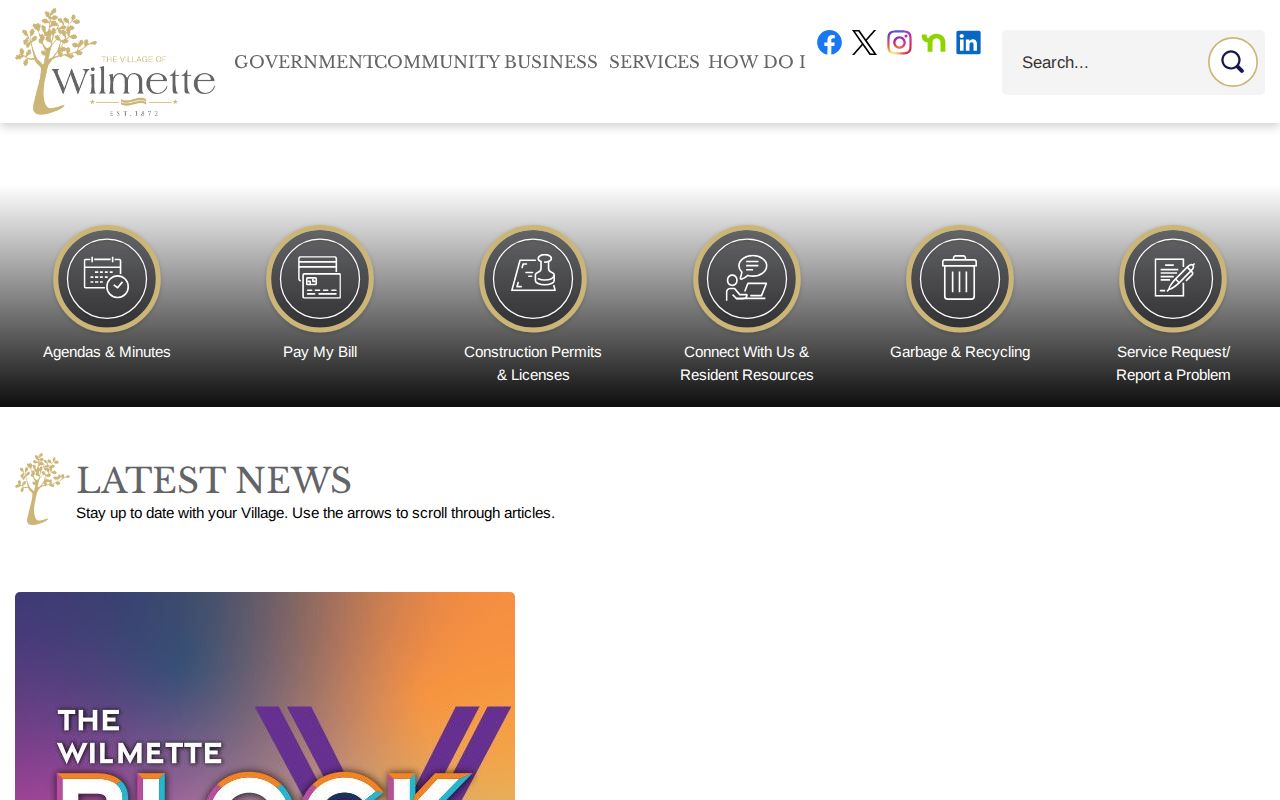
The official hub points to departments and records channels rather than exposing a public household roster.
Ask for a narrow record set by address, date range, department, and document type. A permit can name an owner, applicant, or contractor. A meeting packet can name a speaker. Neither alone proves that the person occupied the house.
Official Wilmette Records Compare Better
Compiled commercial neighbor tools often merge stale addresses and unclear sources. Official systems are narrower but show who keeps the record, what field was searched, and when it was retrieved. That lets a reader correct a wrong parcel or request the underlying instrument.
| Question | Official record route | Compiled commercial report |
|---|---|---|
| What is the legal parcel? | CookViewer PIN and geometry | Boundary method may be unclear |
| Who owns it? | Assessor clues plus recorded deed | May merge old names or addresses |
| Who lives there? | No single complete public roll | Often implies more certainty than sources support |
| Can an error be checked? | Return to the named custodian | Source and date may be opaque |
A transparent list of parcels, sources, dates, and evidence types is more useful than a confident but unexplained roster.
Privacy Limits for Wilmette Neighbors
Parcel maps do not reliably expose non-owner household members, visitors, children, or protected residents. Driver and vehicle addresses are restricted under Illinois law and federal privacy rules. Utility customer data, delivery records, and private association rosters were not found as public Wilmette datasets. Historical directories can also omit a person or list only one telephone subscriber.
Keep the work proportionate. Looking up nearby parcel facts for civic interest, reconnecting, or personal safety does not justify publishing unverified household claims. Correct a mistake at the custodian and remove unsupported notes from a personal file.
Lawful use. Use Wilmette neighbor records for legitimate personal and civic purposes. Never watch, threaten, intimidate, or harass anyone named in a record.
Note: The best neighbor lookup ends with a source-labeled block map, not a claim that every owner is the present occupant.